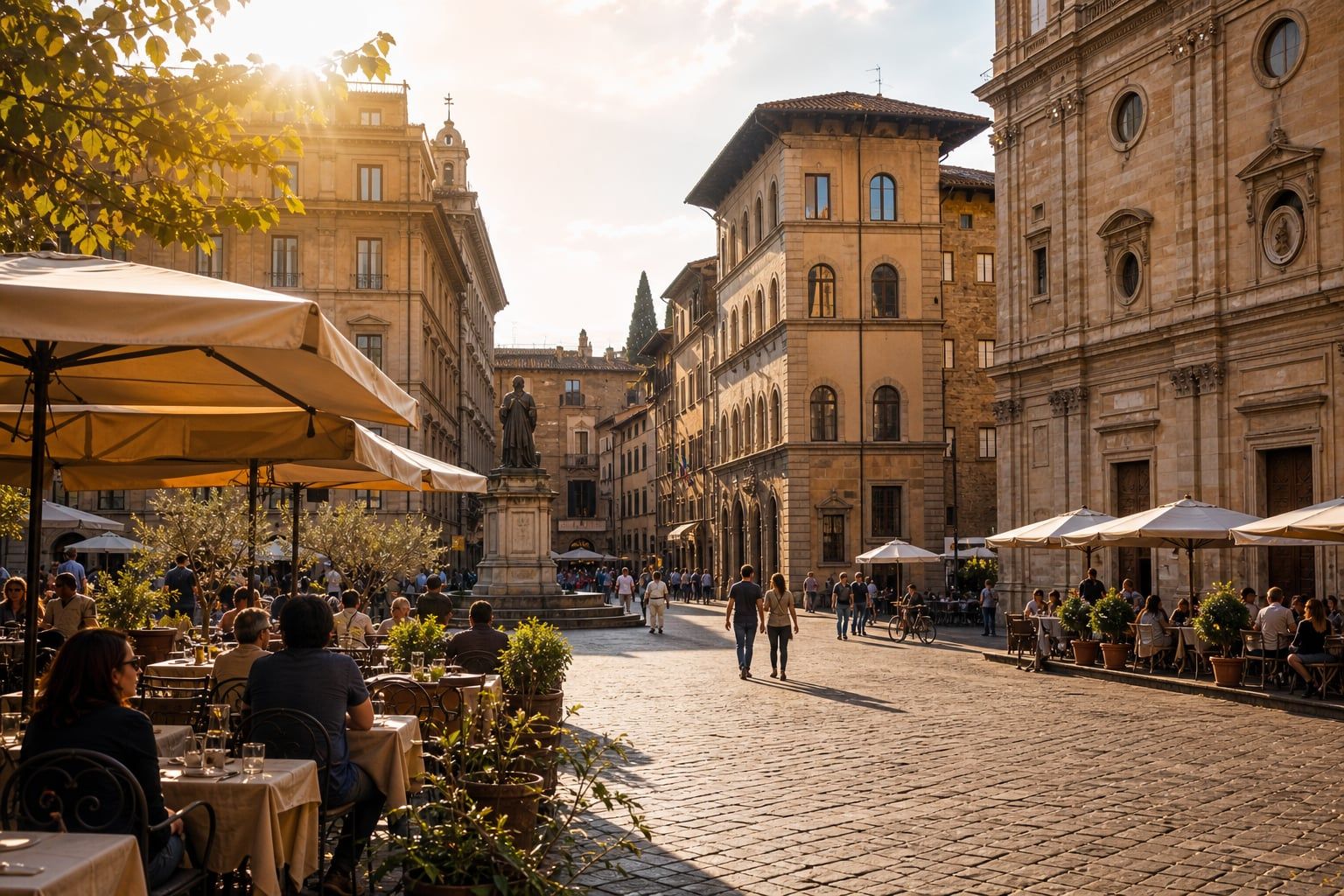
Italy in October: Weather, Crowds and Where to Go
Part of our guide: When to Visit Italy: A Month-by-Month Guide
Italy in October is one of the year’s two best windows for travel, the close runner-up to September and for many travellers’ purposes the more sensible bet than May. The country is still summer-warm in the first half of the month, the school-holiday crowds that filled the cities through summer have gone home, and the weather pattern stays usable for full sightseeing days well into the third week. This is the deep look at what to expect: weather city-by-city, where the month works best, what’s still open, and what to plan around. The broader question of when to visit Italy across the whole year is covered in When to Visit Italy: A Month-by-Month Guide.
Italy’s October weather, where it actually splits
Italy’s October divides into two unequal halves, and travel planning follows that split more than it does any single average. The first two weeks are reliably summer-shoulder weather: highs of 22–24°C in Rome and Florence at midday, sunshine the norm rather than the exception, and the kind of stable Mediterranean pattern that lets you actually plan an itinerary. The second half flips, sometimes within a few days. The first proper Atlantic depression of the season usually arrives in the third week of the month; once it has, the daytime highs drop into the high teens and the nights into single figures.
The regional gap matters more in October than in any other shoulder month, because the country effectively spans two seasons by the end of the month.
The north (Milan, Venice, the lakes) is warm and clear into the second week, then properly variable. Milan averages a daytime high around 19°C in October, but with real range: sunny 23°C days and 12°C with rain in the same week. Venice’s acqua alta season starts in late October, when the higher tides can flood Piazza San Marco for an hour or two at high water; serious flooding is rare but the elevated walkways come out. The lakes (Como, Garda, Maggiore) are at their visual peak as the hillsides turn, but the hotels are winding down.
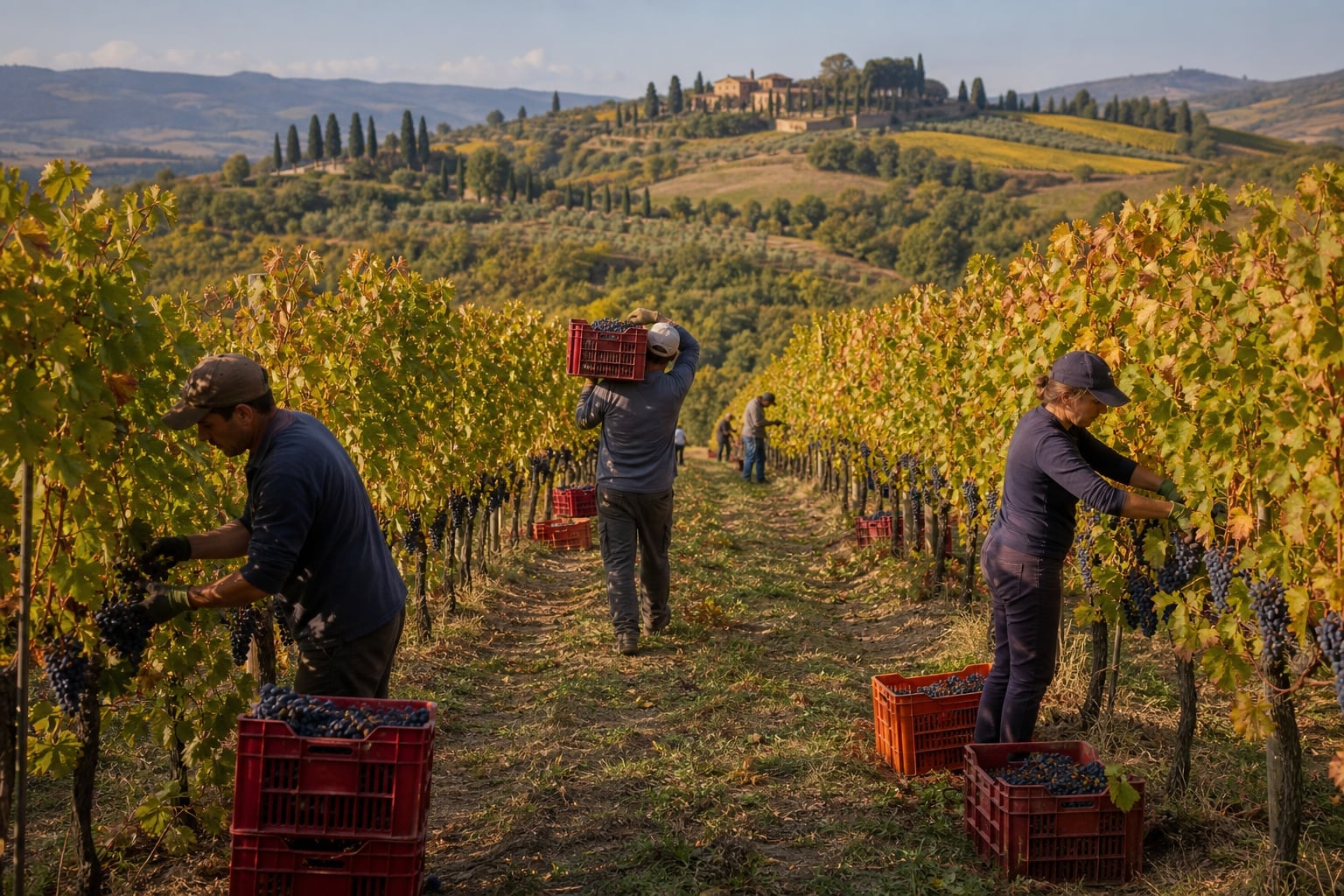
Central Italy (Rome, Florence, Tuscany, Umbria, the Marche) has the most reliable October weather of any region. Daytime highs sit around 21–23°C through most of the month, dropping to about 18°C in the last week. Rainfall picks up after the third week but rarely ruins a day outright. Tuscany and Umbria are in olive-harvest season through late October and early November; the towns around San Gimignano, Montepulciano and Spello run harvest sagre (food festivals) most weekends.
The south (Naples, Apulia, Calabria) gets the last month of proper warm weather. Naples averages 22–23°C in October with low rainfall; the Amalfi Coast and the Sorrento peninsula are warmer still. Sea temperatures hold around 21–22°C through the month, which is genuinely swimmable for anyone other than a northern European. This is the cheapest the Amalfi Coast and Capri get without losing the weather they’re famous for.
Sicily runs on a different clock. The island stays summer-temperate through the whole month. Palermo and Catania average 24–25°C in the first half and 21–22°C in the second; sea temperatures stay above 22°C right through to the end of October. The light by the third week becomes the autumn-Mediterranean gold that landscape photographers plan trips around.
Crowds, openings, and what’s actually different
The biggest single change October brings isn’t weather; it’s the end of the European school holiday. By the second week, Italian and other European schools are back, the summer-holiday infrastructure has been dismantled, and tourist densities at the main sites drop substantially. The Uffizi at 11am in October is a different place from the Uffizi at 11am in July. The same goes for the Vatican Museums, Pompeii, the Accademia in Florence, and most other heavy-traffic sites; queues that ran to two hours in summer drop to twenty or thirty minutes for non-prebooked entries on a typical October weekday.
What’s still open: museums, churches and the major sights run their full hours through October. The cultural calendar is at the start of its strong season rather than the end. La Scala’s opera season opens in early December but the autumn concert and theatre programmes in Rome, Milan and Florence run from the start of the month.
What scales down: some coastal and island infrastructure starts the winter schedule from mid-month. Ferries to Capri, Procida and the Aeolian Islands run reduced services from around the 15th; the last summer-frequency hydrofoils to Capri usually finish in the third week. Smaller seasonal hotels in beach towns close for the season; the bigger resorts stay open. Restaurants and bars in the cities are unaffected.
Where October works best
If October is when you can go, here is where it specifically rewards you. The obvious answer (Rome and Florence) is the right one for a first visit, since those cities work in any shoulder month. The following four destinations are where October beats other shoulder months on its own merits.
Tuscany and Umbria. The canonical October pick, and for good reason. The grape harvest (vendemmia) in Chianti and Montalcino finishes through the first half of the month; olive harvest follows into November. The temperature is right for the long countryside walking the region rewards. Restaurants pivot to autumn menus: white truffle on tajarin in the Alba area, ribollita and pappa al pomodoro across Tuscany, porcini everywhere. Bases worth knowing: Montepulciano for southern Tuscany, San Gimignano or Volterra for the central hilltowns, Spello or Bevagna for Umbria.
The Amalfi Coast and Capri. October beats May here, mostly because of price and tone. The day-trip ferries to Capri run daily through the month, the island has its locals back, and the restaurants behave like restaurants rather than tourist machines. Positano and Ravello keep their views and their food without the August crowds. The catch is that by the last week the season properly winds down: some smaller hotels close, a few coastal restaurants shutter for winter.
Sicily. The dark-horse October destination, especially for travellers who’d otherwise be looking at the Greek islands or Croatia in May. October Sicily is high season for travel writers and lower season for prices. Catania, Syracuse, Taormina, the Aeolian Islands and Palermo are all warmer and quieter than the equivalent September trip would have been. The almond and pistachio harvests are on; food markets are at their autumn best.
Bologna and Emilia-Romagna. Underrated as a single-week October trip. The weather is reliable through the first three weeks; the food calendar is at its annual peak (new vintages, fresh white truffle from the hills around Bologna, the autumn balsamic and parmigiano release dates); and the cities (Bologna, Modena, Parma, Ferrara) are operating at normal local pace rather than tourist saturation. The contrast with Italy in August is sharpest here: August Bologna is empty and shut; October Bologna is full and alive.
What October isn’t good for: the Alps, the Dolomites, and any high alpine destination. Most mountain refuges close at the end of September; the via ferrata and high trails become unsafe as the first snow arrives; cable cars to the higher altitudes are typically shut by mid-month. Save those for July or August, or for January through March if you ski.
Packing, planning and the things to plan around
Packing for two seasons. The first two weeks call for what you’d take in late June: light layers, sunglasses, a sweater for the evenings. The last two weeks need a proper autumn coat and shoes that handle rain. A practical compromise is a single trip’s worth of clothes that work for either, plus one warm layer and a waterproof. The passeggiata (the evening walk) still happens in October; pack something that holds up dressed up or down.
Half-term clashes. Mid-to-late October overlaps with UK and Irish school half-term (the third week is the standard date), and the fourth week is the start of German Herbstferien in some Länder. Rome, Florence, Venice and the Italian lakes see a small surge of family visitors that week; book accommodation further out than you’d expect for an October trip.
Flight connection risk. October has reliable Italian weather but unreliable European weather. If you’re connecting through Frankfurt, Amsterdam, Munich or anywhere north of the Alps, October storms at the connection point can disrupt itineraries that have nothing to do with Italy itself. If a tight connection isn’t avoidable, build a buffer day at the front of the trip rather than the back.
Sagre and harvest weekends. Food festivals are real local events and worth planning a trip around, but they’re also the only time small towns book out. The Alba white-truffle fair runs from early October through mid-November and makes Piedmont accommodation tight on weekends. Chestnut sagre across Lazio and Tuscany cluster on the third and fourth weekends. Slow Food’s Salone del Gusto runs in Turin every two years (next edition: confirm year before planning).
The honest call
For a first visit to Italy where the trip can be timed, October is the most reliable single pick. The weather in the first half is better-behaved than May, the crowds at the major sights are at their annual low outside winter, the food and wine calendar is at its peak, and the cities operate at normal pace rather than tourist saturation. The contrast with August is plain on every front (see Italy in August for that side of the year).
The case against, and it’s a real one: the second half is genuinely variable, particularly north of Rome. A trip booked into the last week of October or first week of November is rolling the dice on weather more than in any other shoulder month. The simplest hedge is to aim for the first two weeks; the second hedge is to base south (Naples, Apulia, Sicily) where the weather buffer is two or three weeks longer.
If your travel reason is specifically cold-weather Italy, Christmas markets, or skiing in the Dolomites (none of which October delivers), Italy in December makes the case for the winter side of the calendar.
Frequently asked questions
What is the weather like in Italy in October?
October splits into two distinct halves. The first two weeks are reliably warm: 21–23°C across central Italy, 23–25°C in the south and Sicily, with mostly stable Mediterranean weather. The second half cools quickly as the first Atlantic storms arrive, dropping daytime highs into the high teens and bringing variable rain. The south stays warmer for longer; Sicily can still feel summer-shoulder until the end of the month.
Is October a good time to visit Italy?
Yes. For most travellers it's the best month after September. Crowds have dropped substantially once Italian and other European schools restart, the harvest and food-festival calendar is at its annual best, and the weather in the first half of the month is reliably warm enough for full sightseeing days. The trade-off is the second half, when the weather becomes variable and some coastal infrastructure scales down.
What's the best place to visit in Italy in October?
Tuscany and Umbria are the canonical answer for first-timers: harvest season, comfortable walking weather, the full restaurant and sagra calendar. For the warmest reliable weather and best sea swimming, Sicily and the Amalfi Coast are stronger picks. Avoid the Alps and the Dolomites at high altitude; most refuges and high cable cars close for the season by mid-month.
Can you swim in Italy in October?
Yes in the south and Sicily for most of the month. Sea temperatures around Naples and along the Apulian coast hold around 21–22°C through October. Sicily stays at 22–23°C right through to the end. The northern coasts (Liguria, the Adriatic) drop quickly and aren't reliably swimmable past the first week.