Italy in December: Weather, Where to Go, and What to Expect
Part of our guide: When to Visit Italy: A Month-by-Month Guide
Italy in December isn’t one trip; it’s at least three. The country effectively spans three climates in one month: Milan and Venice cold and damp at 6°C, Rome and Florence cool and crisp at 12°C, Sicily and the deep south mild and Mediterranean at 14–15°C, plus the Dolomites and the Alps in full ski-season white. Add the Christmas-and-New-Year week, when Italy operates on a calendar of its own, and December is one of the country’s most varied windows for travel. This is the deep look at the weather, where the month works, what closes when, and how the holiday week reshapes the rest. The annual overview is in When to Visit Italy: A Month-by-Month Guide.
Is December a good time to visit Italy?
December is a good time to visit Italy if you want any of three things: a cheap city break in low season (Rome, Florence, Naples), a Christmas-markets-and-cold-weather European holiday (Bolzano, Trento, the Veneto and Alto Adige towns), or a ski holiday (the Dolomites and the Italian Alps). It’s a bad time if you wanted Italian summer in any form. There is no beach swimming north of Sicily, the lakes are misty and grey, the smaller hilltowns are quiet to the point of being closed for the season, and the rain in central and northern Italy is real.
The cost dimension matters more than visitors expect. Hotel and flight prices through the first two and a half weeks of December are at the year’s annual lows in most major cities. The week from 23 December to 2 January reverses that completely: it’s the most expensive seven days of the year in Italy outside Ferragosto, especially in Rome, Florence, Venice and any of the Christmas-market cities. The first half of December is where the value sits.
Italy’s December weather, by region
Italian winter is properly stratified in December. The north is cold and often grey, the centre is cool and variable, the south is genuinely mild, and the high mountains are in ski season. The single most useful planning fact is that the north–south temperature gap is at its annual maximum: Milan and Palermo can be 10°C apart on any given December day.
The north (Milan, Venice, Turin, the lake district). Daytime highs sit around 5–8°C through the month; overnight lows hover at 0–3°C. Fog and grey overcast are the dominant weather pattern; the famous Po Valley winter fog can sit for days at a time. Snow in Milan itself is possible but rare; the surrounding Alps and the Dolomites just north get the snow that the valley generally doesn’t. Rainfall is moderate but spread out: count on five to eight rainy days in a typical December.
The Dolomites and the Alps. In ski season from mid-December onwards. Daytime highs at altitude run -5 to 5°C depending on elevation; the lower valley floors (Bolzano, Trento) sit around 5–8°C. Snow on the runs is reliable from the second half of the month, often earlier with artificial supplementation at the bigger resorts. This is one of the few parts of Italy where December has weather you might travel for rather than around.
Central Italy (Rome, Florence, Tuscany, Umbria). Daytime highs around 10–13°C, overnight lows around 3–6°C. The climate reads as a damp British autumn rather than a proper winter: cool, often grey, frequently wet, but rarely below freezing in the cities. Tuscany and Umbria get colder in the hilltowns at altitude (Cortona, anything above 500m). Rome is the warmest of the central cities; on a clear December day it can feel genuinely pleasant in the afternoon, with sunny outdoor lunches still on the table.
The south (Naples, Apulia, Calabria). Properly mild for a European winter: highs of 13–15°C, lows of 7–9°C. Sunny days are common, particularly along the Tyrrhenian coast. Some afternoons in mid-December can hit 16°C, warm enough for an outdoor lunch and a light coat over your arm rather than on it.
Sicily. The southernmost edge of Europe in winter. Palermo and Catania average 15–16°C in December, and 18°C+ afternoons happen. Walking around Palermo in shirt-sleeves on a clear December afternoon is not unusual. Sea temperatures are still around 16°C, not swimming weather but the air feels like late autumn rather than winter.
Does it snow in Italy in December?
In the high Alps and the Dolomites: reliably, and with consistency from mid-month onwards. In the Apennines and the central Italian mountains: occasionally, particularly in the higher passes. In Milan, Venice, Turin and the Po Valley cities: rarely, and when it does, it usually melts within the day. In Rome: very rarely; the city sees genuine accumulating snow once every few years at most. In Naples and further south: almost never; coastal southern Italy has gone decades without true snowfall in many years.
If the question is whether your trip will see snow: in the mountains, yes (and you can plan around it). In central and northern cities, no, you should not expect any. The lower-altitude Italian winter is wet and cold; snow is something they get on the surrounding mountains.
Where December actually works
Four trips that December suits especially well, ranked by how well the month serves the trip rather than how famous the destination is.
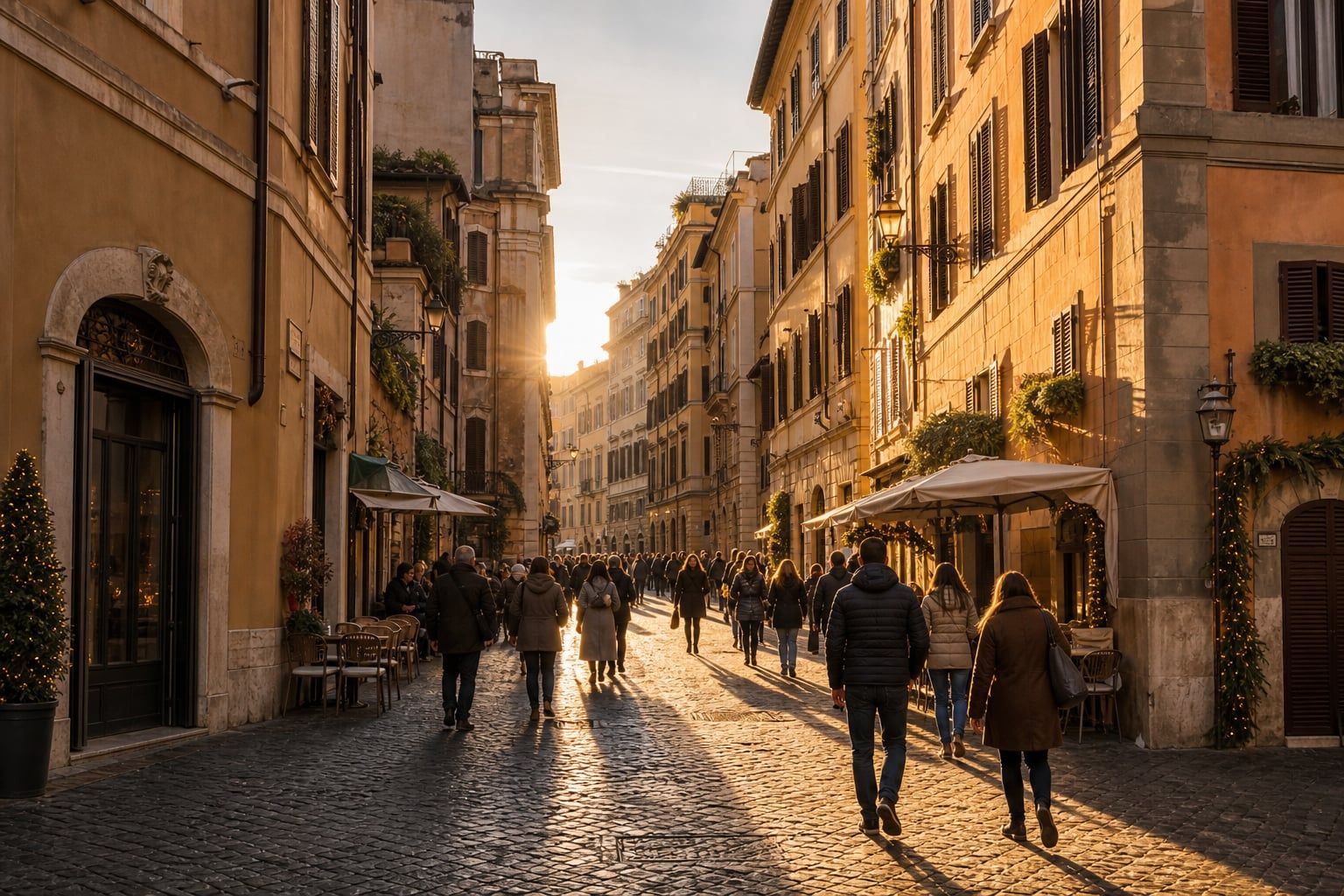
Rome. December is one of the best months to be in Rome. The light is the best of the year: the low winter sun gives the Colosseum, St Peter’s and the Tiber bridges a quality that summer’s overhead sun never produces. Crowds are at their annual low outside the week between Christmas and New Year. Prices on hotels and flights are at their floors. The food calendar pivots to the proper Roman winter dishes: cacio e pepe and amatriciana at full volume, oxtail, artichokes for the carciofi alla giudia, panettone everywhere. The afternoons are short but the light makes them useful.
Bolzano, Trento and the Alto Adige Christmas markets. The German-speaking north of Italy runs Europe’s best Christmas-market season from the last weekend of November through the first week of January. Bolzano’s Mercatino di Natale, Trento’s, Bressanone’s, and the smaller towns through the Val Pusteria are walkable, well-organised and properly atmospheric. Combined with day trips into the Dolomites foothills, this is the most postcard-perfect December trip in Italy. The cultural and practical detail on the markets, the midnight masses, and the regional traditions is in Christmas in Italy.
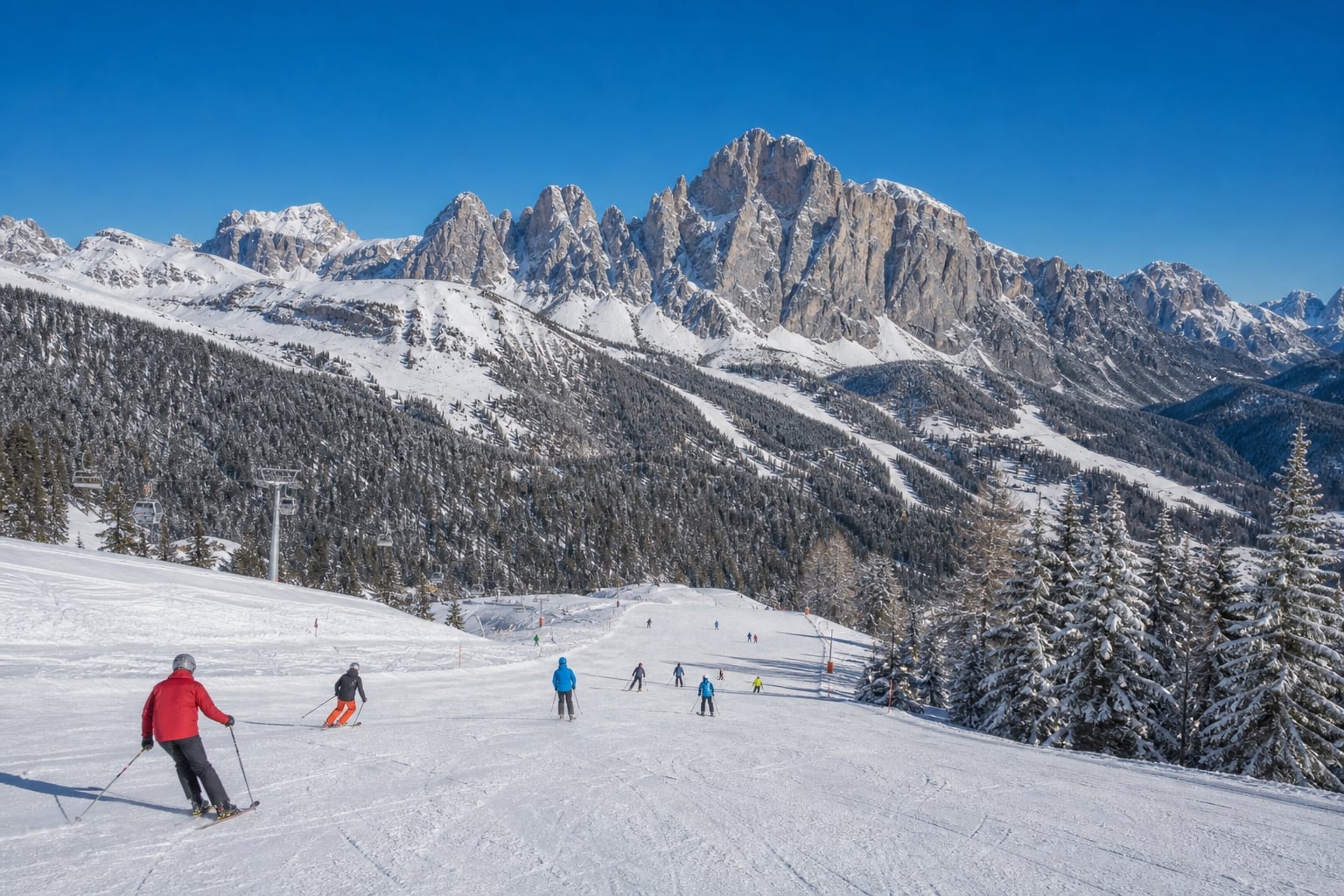
The Dolomites for skiing. If you ski, the Italian side of the Dolomites is among the best alpine skiing in Europe and dramatically cheaper than Switzerland or Austria. The season opens from mid-December (a few resorts open earlier with artificial snow on selected runs) and runs through to mid-April. Resorts to know: Val Gardena, Alta Badia, Cortina d’Ampezzo, Val di Fassa. The Dolomiti Superski lift pass covers twelve interconnected resorts on one ticket.
Sicily and the deep south. Sicily in December is the European warm-weather winter destination most Northern European travellers don’t know about. Palermo, Syracuse, Taormina and the Aeolian Islands all stay comfortable through the month. Restaurants and museums run their full schedules. The contrast with Italy in October is that October has the summer-warm sea while December has empty streets and back-to-local restaurants. Sicily in December is a working Sicilian winter, not a tourist one.
What December isn’t good for, beyond the obvious lakes-and-beaches problem: the central Italian hilltowns (Cortona, Volterra, the smaller Chianti villages, Assisi outside the basilica) are quiet to the point of feeling closed; the Cinque Terre runs reduced ferry and train schedules and many restaurants close for winter; the Veneto outside the Christmas markets is grey and damp.
Christmas, public holidays and what closes
Italy in December has four public holidays clustered into the last three weeks, and they reshape the practical experience of the month.
- 8 December (Immaculate Conception, Immacolata). A national holiday. Schools and most offices close. Larger museums and tourist sites stay open; smaller ones may shut for the day. This is also the unofficial start of the Christmas season: most cities switch on their public Christmas decorations around this date, and the Vatican unveils the year’s Christmas tree in St Peter’s Square.
- 25 December (Natale). Most museums, restaurants and shops are closed. Some hotels run a Christmas-lunch service for guests; most restaurants are closed except the few that specifically open for tourist business (book ahead if so).
- 26 December (Santo Stefano). Also a national holiday. Many restaurants and shops re-open from this date, particularly in tourist destinations.
- 31 December (San Silvestro). Not a public holiday in the formal sense, but most offices and many shops close in the afternoon. Fireworks and cenone (the long New Year’s Eve dinner) are the main events; most restaurants book out weeks ahead for the cenone.
The week between Christmas and New Year is the busiest tourist week in Italy outside Ferragosto. Hotel prices in Rome, Florence, Venice and the Christmas-market cities run at premiums of 60–100% over their normal December rates; high-end restaurants book out a month or more in advance; the Vatican and other major sights can see queues approaching August levels. If your trip falls in this window, book everything in advance: flights, hotels, restaurants, museum entries.
Transport is the practical wrinkle most planners miss. Trenitalia and Italo run reduced timetables on 25 December and 1 January, with the last evening services often cut by 7pm. Regional buses on those days can be down to a skeleton service or none. The 24th and 31st have normal services until evening but reduced from late afternoon. ZTL restrictions still apply in city centres on public holidays.
The honest call
Italy in December is the month where the trip you want determines everything else. If you want low-season city Italy at its cheapest, the first two and a half weeks of December are it. If you want the Christmas Italy of the popular imagination, the German-speaking north and the Mercatini di Natale deliver. If you want skiing, the Dolomites are world-class and underpriced. And if you want winter sun on a European budget, Sicily is the answer most Western Europeans don’t think of first.
What December is not for: Italian summer in any form. The beaches are closed, the lakes are silent, the hilltown trattorias are mostly shut. If those are what your Italy trip is about, come back in May or October. For the most extreme opposite of December’s calendar (empty cities, packed coast, the full force of the Italian holiday rhythm), see Italy in August.
Frequently asked questions
Is December a good time to visit Italy?
Yes, for specific trip types. The first two and a half weeks are the cheapest of the year in major cities (Rome, Florence, Milan, Venice), with light crowds and the year's best winter light. The Christmas markets of Alto Adige are at their peak. The Dolomites open for skiing from mid-month. Sicily and the south stay mild enough for outdoor sightseeing. December isn't for Italian summer in any sense: there's no beach swimming, the lakes are quiet, and many hilltown destinations are effectively shut for the season.
What is the weather like in Italy in December?
Italy's December weather varies widely by region. Milan and Venice average 5–8°C with frequent grey overcast; Rome and Florence sit at 10–13°C and feel like a damp British autumn; Naples and the south are properly mild at 13–15°C; Sicily averages 15–16°C with regular sunny days. The Alps and the Dolomites are in full ski season with reliable snow from mid-month. Rainfall is moderate across the north and centre; the south is drier.
Does it snow in Italy in December?
In the high Alps and the Dolomites, reliably from mid-month onwards. In the Apennines and central Italian mountains, occasionally. In Milan, Venice, Turin and the northern cities, rarely (and it usually melts the same day). In Rome it's a once-every-few-years event. In Naples and the south, almost never. The Italian lower-altitude winter is wet and cold; snow is something they get on the surrounding mountains.
What's the best place to visit in Italy in December?
Four work well for different reasons: Rome for low-season city travel with the year's best winter light; Bolzano, Trento and Alto Adige for the Christmas markets (the most postcard-perfect December trip in Italy); the Dolomites for skiing from mid-month; Sicily for European winter sun on a European budget. Avoid the central Italian hilltowns and the lake district unless you specifically want quiet.