Italy in August: Heat, Ferragosto, and Where the Month Actually Works
Part of our guide: When to Visit Italy: A Month-by-Month Guide
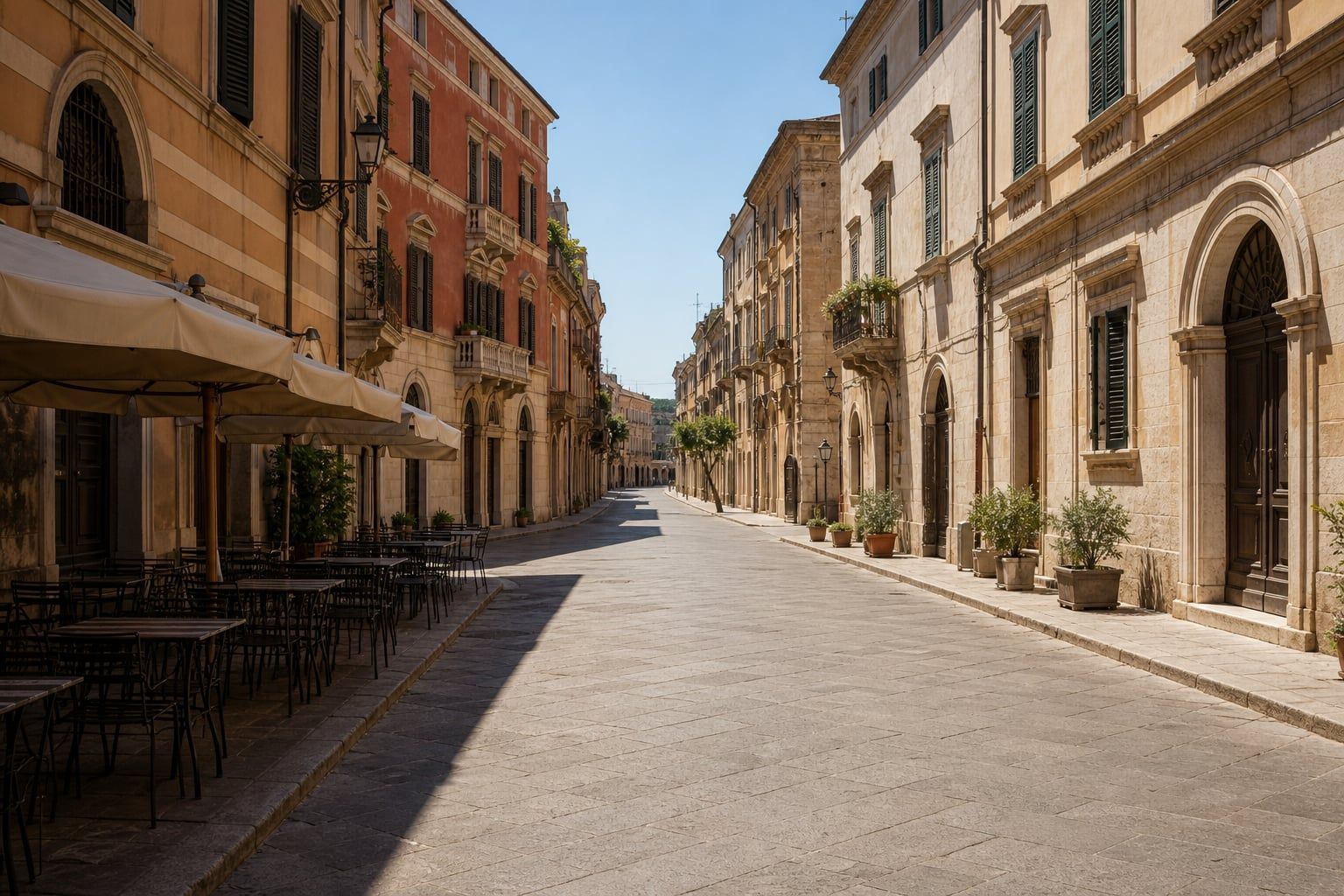
August in Italy is the country at its most counter-intuitive. The textbook tourist month is also the month most Italian guidebooks suggest avoiding for the famous cities, the only month where the country effectively splits in two (Italians at the coast, tourists in the cities), and the month with the year’s most significant set of small-business closures. It can also be the most Italian month of the year if you spend it the way Italians do. This is the deep look at what August actually means on the ground: the heat, Ferragosto, what closes when, where the month works, and where it falls down. The annual frame is in When to Visit Italy: A Month-by-Month Guide.
Why August is complicated
The challenge with August in Italy isn’t one thing; it’s the intersection of three. First, the heat. Rome, Florence and Venice are reliably above 30°C from morning to evening through most of August, with high humidity that makes the felt temperature noticeably higher than the thermometer reading. Second, the crowds and prices. August is peak European holiday season, and the famous cities and the coastal destinations are at their annual maximums for both. Third, and the hardest one for visitors to plan around, the closures.
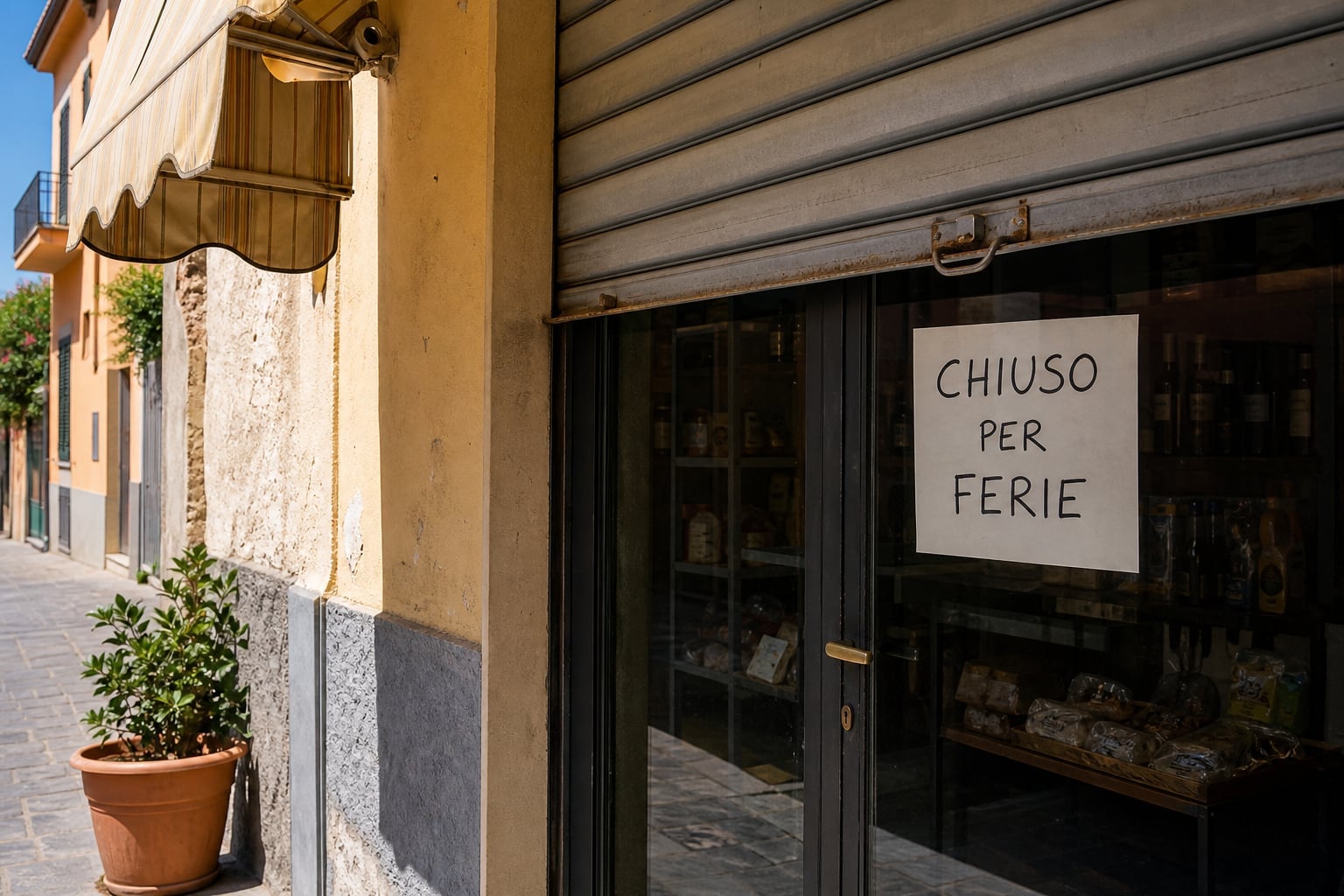
Italians take their main annual holiday in August. The traditional pattern is to leave the city in the first or second week and stay away until late August or early September, clustering around the Ferragosto holiday on 15 August. The practical effect is that small restaurants, neighbourhood bars, family-run shops, dry cleaners and tailors close for two or three weeks at a stretch. The handwritten chiuso per ferie sign goes up on doors all over the country.
What this means for visitors is that the Italy of the small trattoria where the cook’s grandmother is in the kitchen (the Italy recommended in every other guidebook) is essentially closed in August. What remains open is largely the tourist-facing infrastructure: hotels, the bigger restaurants near the main sights, the museums and major attractions themselves, and the chain stores.
Italy’s August weather, by region
Italy in August is hot. How hot, where, and how that hot manifests is what determines whether a trip is bearable or punishing.
The northern cities (Milan, Venice, Turin). Daytime highs of 28–32°C with high humidity. Venice in particular has a notable humidity problem (built on water, surrounded by canals); afternoons can feel like a sauna. Air quality in Milan during August heat events is poor. Nights stay warm at 18–20°C.
Central Italy (Rome, Florence). The hardest combination. Daytime highs of 30–34°C, often with humidity in the 60–70% range; nights only drop to 19–22°C. The Pantheon at 1pm in August has a quality of heat that travel photos systematically understate; the marble of the Roman Forum can hit 50°C in surface temperature. The Vatican at midday means queuing in 33°C sun before reaching shade. Florence is similar but smaller, which means less escape: fewer cooling courtyards, fewer large open green spaces. The exception is Rome’s parks (Villa Borghese, Villa Pamphili) which offer real shade and a genuine temperature drop in the afternoon.
The south (Naples, Apulia, Calabria). Hot but a drier heat than the centre, closer to Spain than to France. Daytime highs of 32–35°C with lower humidity; sea breezes make the coast genuinely pleasant from early evening. Naples itself is harder: the centro storico is a dense heat trap. The islands (Ischia, Procida, Capri) and the mainland coast are at their summer best.
Sicily and Sardinia. Hot and dry. Daytime inland highs of 34–37°C, occasionally 40°C+ in the interior of Sicily; the coasts are 2–4°C cooler thanks to constant sea breezes. Sea temperatures of 25–26°C. Both islands are at peak Italian-beach season; this is also when they’re at their most expensive and busiest. Both stay warm well into the evening; outdoor dining at 10pm in August Sicily is a normal hour.
The Dolomites and the Alps. Summer at altitude. Daytime highs at 1,500m sit around 22–25°C; the higher passes are cooler still. This is the alpine summer peak: hiking, lakes, malga (mountain pasture) lunches. Crowds at the popular trails (Tre Cime, Alpe di Siusi) are real and the parking lots fill early in the morning.
Ferragosto and the Italian August
Ferragosto, 15 August, is the central date of the Italian summer. The holiday’s roots are Roman (Augustus’s Feriae Augusti, the festivals of Augustus, observed since 18 BC), and it’s one of the oldest continuously celebrated public holidays in Europe. The Catholic Church layered the Feast of the Assumption on top in the medieval period; the two coexist now as a single date.
In practice, Ferragosto is when Italy collectively goes to the beach. The whole country’s holiday calendar pivots around the date. The week before, Italian roads heading south or coastward run heavy with families on the esodo (the holiday exodus, which is reported on national news each year). The week after, the reverse direction is busy.
The winter equivalent of this pattern is the Italian Christmas season, which has its own dense run of family observances, regional traditions and widespread closures: see Christmas in Italy for that side of the year. August and the Christmas window are the two periods when Italian family life most clearly takes precedence over the visitor calendar.
Restaurants and hotels in beach destinations book out a year in advance for Ferragosto weekend. Prices at the coast double or triple. The day itself involves long lunches with extended family, fireworks displays in many coastal towns, and the Falò di Ferragosto (beach bonfires) in some southern regions.
For visitors, Ferragosto matters in three ways. Booking: any beach or coastal destination needs to be booked months ahead for the 13–17 August window. Pricing: this is the most expensive single week of the year at most coastal hotels. Logistics: trains on 15 August itself run reduced schedules; some museums in the cities close for the day; many restaurants open only for the pranzo di Ferragosto (the festive lunch).
Where August works (and where it doesn’t)
If August is when you can or must come, the trips that work in August are mostly coastal, island, or alpine. The trips that don’t work, mostly the inland cities. Here is which is which.
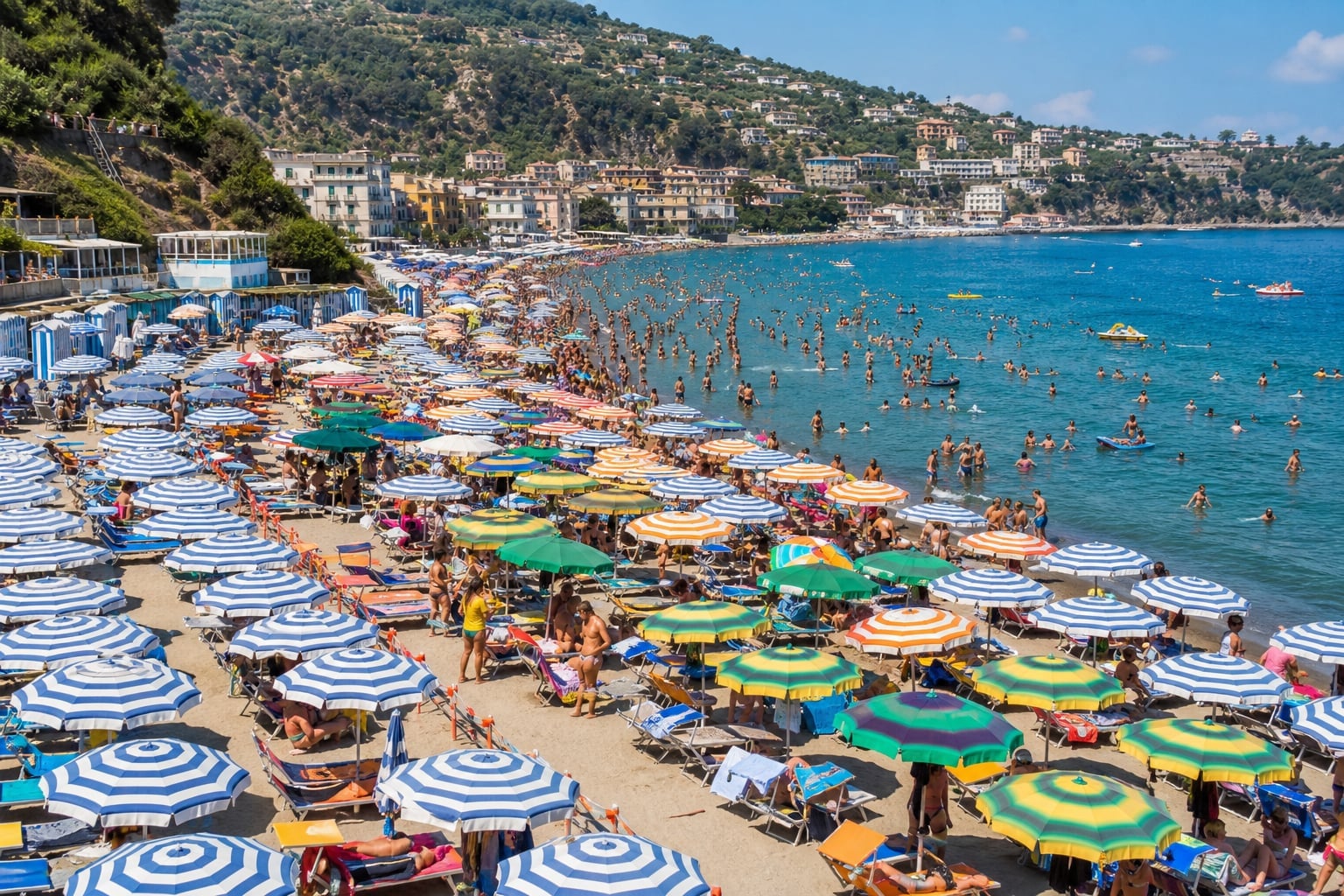
The Italian coast for the Italian-beach experience. This is what makes August in Italy distinctive rather than just hot. If you want to understand how Italians actually holiday, August at an Italian beach destination is the way. Apulia, Sicily, Sardinia, the Cilento coast and the Aeolian Islands are at their peak. The trade-off is that you’re paying peak prices for the Italian-family experience rather than the foreign-tourist one. The trip will look and sound different from any other Italian trip in the rest of the year.
The Dolomites and the Alps for hiking and alpine summer. August is the high point of alpine summer. The huts (rifugi) are all open; the trails are passable; the alpine pastures are at full bloom. This is one of the genuinely good cases for August Italy: cool nights, comfortable daytime temperatures, and a part of the country that is most itself in August. Book ahead, since the popular rifugi fill weeks out.
The Italian lakes for a moderate compromise. Lake Como, Garda, Maggiore and the smaller lakes get hot in August but stay cooler than the inland cities, and the breeze off the water makes evenings pleasant. They’re not quiet (this is also peak European holiday season for the lakes), but they’re functional and well-served.
Where August doesn’t work for tourists:
- The famous cities (Rome, Florence, Venice). Heat, crowds and closures triple-stack. Sights remain open but the small-restaurant ecosystem is largely shut, and the heat makes outdoor sightseeing punishing from mid-morning to mid-evening. Materially better in any other month: see Italy in October for the most direct equivalent.
- The hilltowns of central Italy in high summer. The same problems as the cities on a smaller scale: family trattorias close for ferie, the heat in stone-built towns is unforgiving, the surrounding countryside is brown rather than green.
- The mainland coast for a quiet-beach expectation. August is the loudest, busiest, most expensive coast month. If you wanted Italian-Riviera-quiet, come in May or September.
The closures, in practical terms
The August closures are the single biggest difference between an August Italy trip and one in any other month, and they’re worth understanding in detail.
Restaurants and bars. Many close from around 8–10 August through to 25–30 August. The exact dates vary; the practice is most concentrated in residential and family neighbourhoods (Monti and Trastevere outside Rome’s tourist core, Oltrarno in Florence, most of central Naples). Tourist-zone restaurants stay open. The check before going: walk past in the morning or call ahead; the chiuso per ferie note on the door is the universal sign.
Small shops and services. Family-run shops, dry cleaners, tailors, the corner alimentari (grocery) and many bakeries close for the same window. Pharmacies rotate (a duty pharmacy is always open in each district, listed on a sign posted at every closed pharmacy).
Public services. Most government offices and some banks run reduced hours through August, lightest in the week of Ferragosto itself. ZTL (restricted-traffic zone) restrictions stay enforced in city centres.
Transport. Trains and intercity buses run normally. Local urban buses run reduced summer schedules from late July onwards. Hotels stay open and run their normal services.
Museums and major sights. Mostly open on normal hours. Some smaller museums close for part of August; checking the official site in the week before travel is wise.
The practical compromise: in Rome or Florence in August, plan for breakfast at the hotel, a major-sight visit in the morning, lunch at a tourist-zone restaurant (these are open and often surprisingly good in August because they’re staffed for the visitor season), an air-conditioned museum or church in the afternoon, dinner at a known open restaurant booked the same morning. It’s a workable trip; it’s just a different one.
The honest call
If you have flexibility, don’t come to Italy in August for the famous cities or the hilltowns. The same trip in May, September or October is better on every measurable axis: weather, crowds, prices, what’s open. The direct comparison is in Italy in October, with the winter alternative (low-season cities, best winter light, ski option) in Italy in December.
If you have to come in August (school holidays, work calendars, family logistics), come to the coast, the islands, or the mountains. These are the parts of Italy that work in August on their own merits rather than despite August. The coast in particular delivers something you can’t get in any other month: the Italian August itself, which is its own thing and worth experiencing if you can be honest about what it is.
What we wouldn’t do: an August city-tour trip if any other month is reachable. The Italy you’re trying to see is largely indoors and stretching to keep itself open for you.
Frequently asked questions
Is August a good time to visit Italy?
For most travellers, no. The famous cities (Rome, Florence, Venice) combine heat, peak crowds and the August closure pattern in a way other months don't. August does work for two specific trip types: the Italian coast and islands (Apulia, Sicily, Sardinia) for the Italian-beach experience, and the Dolomites and the Alps for alpine summer. If schedules allow, May, September or October are materially better for a city-focused trip.
What is Ferragosto?
Ferragosto is the Italian public holiday on 15 August, celebrating the Catholic Feast of the Assumption and, in its pre-Christian roots, Augustus's Feriae Augusti. It functions as the pivot of the Italian summer: most Italians take their main annual holiday around this date, the country effectively goes to the beach, and many small businesses close for two or three weeks. For visitors, Ferragosto means peak prices at coastal destinations, reduced services, and many city restaurants closed.
Is Italy too hot to visit in August?
For the inland cities, often yes. Rome, Florence and Venice see daytime highs of 30–34°C with high humidity, and the Pantheon or the Vatican at midday in August is genuinely uncomfortable. The coast and the islands are hot but tempered by sea breezes; the Dolomites and the Alps are at their summer peak with comfortable daytime temperatures. The heat problem is concentrated in inland central cities.
Are things closed in Italy in August?
Yes. Many small businesses close for two to three weeks centred on Ferragosto (15 August). The pattern affects family-run restaurants, neighbourhood bars, small shops, dry cleaners, tailors and many bakeries. The tourist-facing infrastructure (hotels, larger restaurants near the main sights, museums, chain stores) stays open. Pharmacies rotate so one is always open in each district. Trains and intercity buses run normally; local urban buses run reduced schedules. A chiuso per ferie (closed for the holidays) sign on a door is the universal indicator.